Know what matters next
2026-10-20
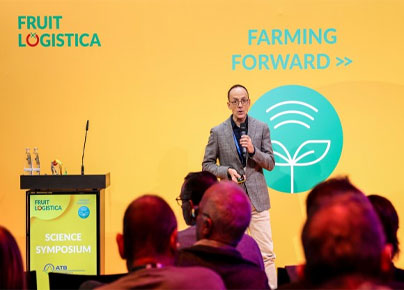
More than 130 sessions, over 200 experts and five stages: On February 3–5, 2027, FRUIT LOGISTICA brings international expertise from business, science, policy and practice to Berlin. How are retailers and producers responding to changing consumer demands, climate change and new technologies? How can supply chains become more resilient – and which innovations have the potential to move the fresh produce industry forward?
Read More »Advertisement



The Future of the Banana Industry is a Shared Responsibility, says Fyffes
2026-10-01
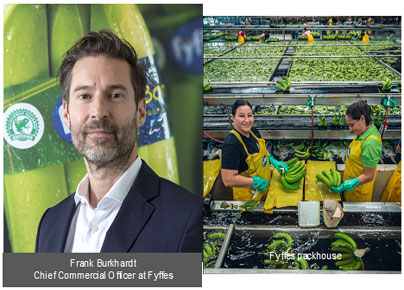
Bananas remain one of the most affordable food products in supermarkets, but behind that affordability lies a supply chain facing unprecedented pressure. Ahead of Fruit Attraction 2026, Fyffes is calling for greater collaboration across the banana sector to develop a long-term sustainable model that ensures growers, producers, importers and retailers can continue investing in the future of the category.
Read More »Advertisement

FRUIT LOGISTICA 2027 brings innovation together in the new Innovation Zone
2026-09-15
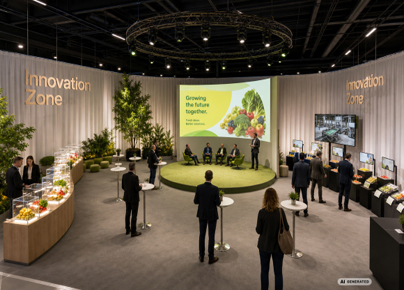
The new Innovation Zone will showcase the entire product innovation cycle, from market launch to proven success. The new Innovation Zone will be located in Hall 3.2. With the new Innovation Zone, FRUIT LOGISTICA further strengthens its position as the international innovation platform for the fresh produce industry. From February 3 to 5, 2027, the Berlin event will bring together its most important innovation formats for the first time to create a cohesive ecosystem.
Read More »Advertisement

Messe Berlin and NürnbergMesse Announce Strategic Partnership to Strengthen India's Fresh Produce and Organic Food Industries
2026-09-01

Mumbai, India, September 1, 2026 – Messe Berlin and NürnbergMesse today announced a strategic partnership that will bring together FRUIT LOGISTICA, the world's leading trade show for the global fresh produce industry, and BIOFACH, the world's leading exhibition network for organic food, in Mumbai. FRUIT LOGISTICA Connect India, a new exhibition format under the globally recognized FRUIT LOGISTICA brand, will debut alongside BIOFACH INDIA.
Read More »Advertisement
Reybanpac Publishes Its 2024–2025 Sustainability Report
2026-08-20
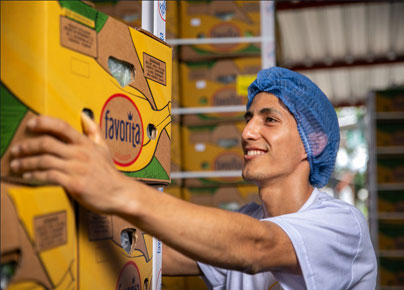
Reybanpac has published its biennial sustainability report for 2024 and 2025, prepared in accordance with the Global Reporting Initiative (GRI) standards. The new report details the company’s environmental and social best practices within its banana division, in line with its purpose of nurturing people and cultivating well-being. José Antonio Vargas, general manager, states that, despite the challenges, Reybanpac has reaffirmed its commitment to sustainable and resilient management through three key pillars: nurturing people, cultivating responsibly and growing stronger communities.
Read More »Advertisement
Maersk Raises Outlook Again as Strong Demand and Freight Rates Boost Profit
2026-08-14
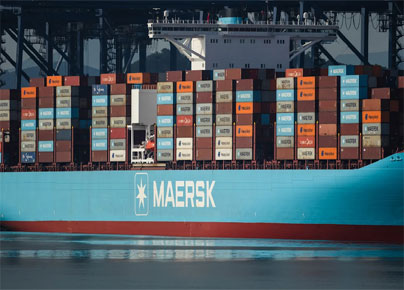
Danish shipping group Maersk (MAERSKb.CO) announced on Thursday that it has raised its full-year earnings guidance for the second time this year, surpassing profit forecasts as global container demand remained resilient amidst the ongoing conflict in the Middle East. Surging freight rates, driven by port congestion and strong Chinese export growth, generated a significant windfall for the company, outweighing the additional costs associated with disruptions in the Middle East.
Read More »Advertisement


Cape Town port performance improves before fruit season
2026-08-14

Cape Town's port performance has significantly improved ahead of the 2026/27 deciduous fruit export season, especially concerning reefer capacity. Transport Minister Barbara Creecy announced operational improvements, including an impressive 39.9-minute average truck turnaround time and a reduction in vessel waiting times from 115 hours to 44.3 hours. With the Port of Cape Town handling about 80% of South Africa's deciduous fruit exports, maintaining the cold chain is crucial. Preparations include ensuring sufficient reefer plug-point capacity and infrastructure to support the export process.
Read More »Advertisement


Cameroonian Bananas: 34% Increase in Exports in July
2026-08-14
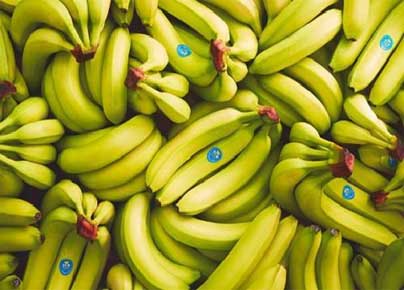
In July 2026, Cameroonian banana producers achieved remarkable export success. According to data from the Cameroon Banana Association (Assobacam), the three active exporters shipped a total of 20,577 tonnes of bananas to international markets. This marks a significant increase of 34.1% compared to the 15,336 tonnes recorded in July 2025. The most substantial growth was seen in the Compagnie des Bananes de Mondoni (CDBM), the second subsidiary of the French group Compagnie fruitière de Marseille.
Read More »Advertisement


Market Overview – Week 33/26
2026-08-14

In week 33, banana prices in St. Petersburg varied by brand, volume, quality, and packaging. At the beginning of the week, the price was approximately USD 15.00 per box CIF. However, due to weak demand from high temperatures and an abundance of local seasonal fruit sold at competitive prices, the price dropped to USD 13.80 per box CIF from Wednesday onwards. During this week, nearly 1.55 million boxes were discharged, and around 1.52 million boxes are expected for week 34. The USD exchange rate was 84.54 RUB. In the Mediterranean region, the price of Ecuadorian bananas varied by region, volume, brand, packaging, and weight. Generally, these bananas were priced around USD 12.00 to USD 13.00 per box CIF, while bananas from Central America sold for approximately USD 2.00 less per box.
Read More »Advertisement



Earnings recovery in Q2 for Hapag-Lloyd despite substantial cost headwinds
2026-08-14
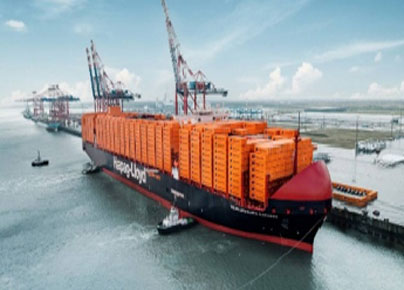
Hapag-Lloyd concluded the second quarter of 2026 with a slightly higher Group EBITDA of USD 829 million (EUR 712 million) compared to the prior quarter. Group EBIT declined to USD 176 million (EUR 150 million), while Group profit decreased to USD 83 million (EUR 71 million). Following an unsatisfactory start to 2026, with earnings impacted by operational disruptions, volumes and spot rates picked up significantly in the second quarter.
Read More »Advertisement

Contecon Manzanillo Authorized to Operate with 15.5 Meter Drafts
2026-08-14
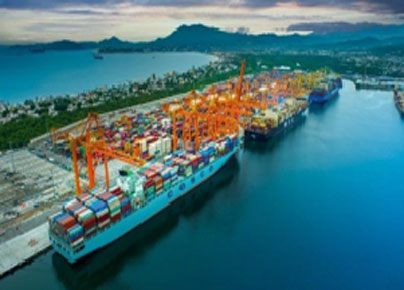
The Regional Port Authority has authorized Contecon Manzanillo to receive vessels with a draft of up to 15.5 meters, making it the only terminal at the Port of Manzanillo with this operational capacity. This allows it to handle Ultra Large Container Vessels (ULCVs) of up to 24,000 TEUs. According to José Antonio Contreras, CEO of Contecon Manzanillo, this is the first step towards achieving an operational draft of 17 meters at its new docks.
Read More »Advertisement



Banana Program Provides Strong Evidence for Reducing Nitrogen Loss
2026-08-14
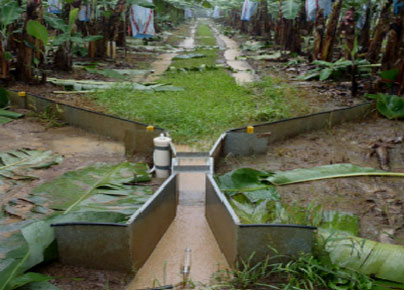
Recent results from DairyNZ's Banana Power and Practice program provide compelling evidence that incorporating bananas into dairy pastures can help reduce nitrogen losses in freshwater while maintaining milk production and farm profitability. A four-year on-farm trial at Lincoln University's Research Dairy Farm demonstrated an average reduction of 33 per cent in annual nitrate leaching, which decreased from 18 kg/ha/year to 12 kg/ha/year in perennial ryegrass and white clover pastures containing an average of 17 per cent banana dry matter, compared to pastures without bananas.
Read More »Advertisement

Fuel and shipping costs affect Dole results
2026-08-14

Shares in Dole Plc fell sharply following the release of second-quarter results that highlighted the negative impact of the ongoing unrest in the Middle East on fuel prices and shipping costs, which have adversely affected profits. For the second quarter of 2026, ending June 30, the company reported a 2.9% increase in revenue to $2.499 billion (€2.16 billion), but profitability declined. Gross profit fell by $23 million to $195 million, compared to $218 million in the same quarter of 2025.
Read More »Advertisement

Banana Exports Account for 73% of Cameroon's Total Under Five-Year Program
2026-07-10
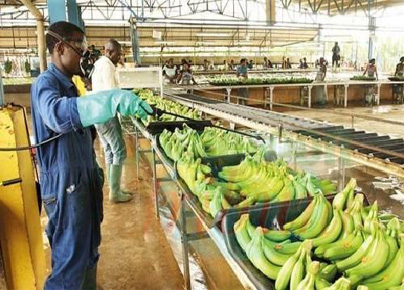
In 2025, certified banana production represented 73% of Cameroon's total banana export volume, amounting to approximately 160,000 metric tonnes annually. This information was sourced from "Regeneration Takes Roots in Cameroon," a report released by the international NGO Rainforest Alliance. The report details a five-year program with a budget of $15.4 million (8.8 billion CFA francs), which was implemented from 2020 to 2025.
Read More »Advertisement

Market Overview – Week 28/26
2026-07-10

In week 28, the price of bananas in St. Petersburg ranged from USD 16.60 to USD 17.25 per box, CIF. Approximately 1.05 million boxes were discharged this week. Local traders reported that one vessel scheduled to arrive in week 28 was rescheduled for week 29, during which around 1.835 million boxes are expected to be discharged. The USD exchange rate was 76.40 RUB. In the Mediterranean region, Ecuadorian bananas were priced at around USD 16.00-17.00 per box, CIF, depending on the brand, volume, region, and packaging. Bananas from Central America were sold for about USD 2.00 per box less.
Read More »