Maersk Introduces Emergency Freight Charges Amid Escalating Crisis in the Strait of Hormuz
2026-10-02
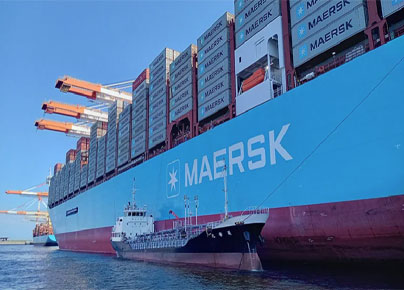
A.P. Moller-Maersk has implemented emergency freight charges for cargo moving to and from the upper Gulf region because of rising security risks around the Strait of Hormuz. These risks are forcing operators to pay more for rerouting, storage, and additional insurance.
The new surcharges apply to existing bookings and cargo already in transit. They are set at $1,800 for a 20-foot dry container and $3,000 for a 40-foot dry container. Additionally, refrigerated, specialised, and dangerous goods containers are charged $3,800. A separate fee of $1,000 per container will apply for any vessel transiting the Strait itself, added to the emergency rates.
These charges affect nearly every major upper Gulf gateway, including ports in Iraq, Kuwait, Saudi Arabia (Dammam and Jubail), Bahrain, Qatar, the United Arab Emirates, and Oman. However, the port of Salalah on Oman's southern coast, located outside the Strait, is exempt from these charges. Maersk said the emergency rates cover alternative routes, potential storage, additional charters, and onward transport once safe passage resumes. The separate transit fee covers increased insurance premiums and crew risk compensation, replacing the company's previous landbridge charges.
The company has warned that these rates may change as conditions evolve, and freight forwarders managing multimodal shipments through the region will need to re-evaluate cost calculations for ongoing shipments and existing client quotes.
These charges come in response to heightened tensions between the United States and Iran. On September 8, the U.S. military reported that it had destroyed five Iranian oil tankers in retaliation for missile attacks on a U.S. Navy warship. The following day, Iran claimed to have targeted ten vessels near the Strait, including two linked to the U.S., as well as eight oil tankers it accused of using unauthorized routes. Notably, reports indicate that at least one seafarer has been killed and another is missing.
As a result, commercial traffic through the waterway has sharply declined. Reuters' ship-tracking data showed only seven vessels transiting the Strait on Wednesday, down from twelve the previous day, and significantly below the ten-day average of fourteen. Some vessels may also be operating with their transponders turned off, suggesting that actual traffic could differ from reported figures.
The Strait of Hormuz is crucial for global crude oil and liquefied natural gas transport, and a prolonged disruption poses significant risks to global supply chains, freight rates, and delivery reliability. The outlook for a quick resolution seems limited. At the same time, President Donald Trump has suggested that he expects the conflict to end after the November midterm elections. The Wall Street Journal has reported that senior U.S. advisers have privately warned that the situation may continue throughout the remainder of his presidency, possibly extending into January 2029.