Plátano de Canarias Losing Market Share to Dollar Bananas requests more aid for outermost regions
2026-03-20
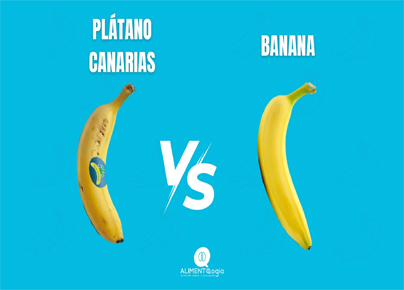
Plátano de Canarias has in recent years faced mounting structural, economic, and institutional pressures, prompting renewed calls from producers to safeguard existing support mechanisms while addressing shifting market dynamics and internal imbalances.
Over the past decade, locally grown plátanos—primarily from the Canary Islands—have steadily lost ground in European markets to imported bananas. Between 2015 and 2024, imports into the European Union rose by 25.1%, increasing from 4.25 million tons to 5.32 million tons. In contrast, EU production remained largely stagnant, edging up only slightly from 669,700 tons to 677,600 tons. As a result, the share of European plátanos in total supply fell from 13.6% to 11.3%.
Price dynamics have played a key role in this shift. While the nominal price of imported bananas rose modestly—from €0.62 to €0.69 per kilogram—high inflation over the same period effectively made them cheaper in real terms. Adjusted for inflation, imported bananas in 2024 cost the equivalent of €0.53 per kilogram in 2015 euros, around 14.5% less. Exchange rate effects further reinforced this advantage, reducing costs by an additional 14% to 15% when the dollar strengthened against the euro.
At the same time, production costs for European plátanos increased sharply. Farmgate prices rose from €0.73 per kilogram in 2015 to €0.85 in 2024, a 16.4% increase, driven by a 35% rise in production costs and stricter regulatory and environmental standards. Imported bananas, mainly from Latin America and Africa, saw far smaller price increases—from €0.60 to €0.65 per kilogram, or 8.5%. Consequently, the price gap widened from €0.13 per kilogram in 2015 to €0.20 in 2024, intensifying competitive pressure in a market highly sensitive to price differences.
These trends were particularly visible in Spain, where banana imports surged by 79.1% over the decade, reaching 496,683 tons in 2024. This led to a growing trade imbalance, which worsened further in 2025 to nearly 396,000 tons, despite a domestic market consumption of approximately 628.5 million kilos. Although Plátano de Canarias retained 65.3% of the category’s value—worth €1.311 billion—the erosion of market share has had direct consequences for farm incomes, employment, and investment in the islands, where more than 15,000 people depend on the sector.
External shocks have also shaped recent developments. In 2022, the unit value of plátanos in the EU market rose to €0.72 per kilogram amid logistical and energy disruptions affecting food supply chains. This period coincided with the aftermath of the La Palma volcano eruption in September 2021, which further strained production and distribution.
Alongside these external challenges, internal structural issues within the sector have become increasingly evident. The distribution of European aid under the Posei program has highlighted significant disparities among producers. In 2025, total funding for plátano subsidies amounted to €141 million, but more than half of this—54.7%—was allocated to just 6.25% of beneficiaries. Specifically, 389 producers received €74.2 million, while 5,831 small and medium-sized farmers shared the remaining €60.7 million.
Although all producers receive the same payment per kilo, differences in production scale result in a highly uneven distribution of total aid. Small producers—those producing less than 40,000 kilos annually—represent nearly 70% of beneficiaries but receive only about 14.7% of the total support. In contrast, those producing over 200,000 kilos account for just over 6% of recipients but capture nearly 55% of funding. The number of beneficiaries has also declined over time. In 2025, 7,103 applications were submitted for Posei aid, 93 fewer than the previous year and 1,283 fewer than in 2012. After accounting for withdrawals and rejections, the final number of recipients fell to 6,220. Overall, the sector has lost around 1,500 beneficiaries since 2012, a decline that has disproportionately affected small-scale producers.
Cultivated area has also shown a downward trend. While 5,002 hectares were subsidised for outdoor plátano production in 2025, this remains below historical levels, with 140 fewer hectares than in 2012. These figures underline a gradual contraction in the sector’s base, even as production continues under increasing economic pressure.
Against this backdrop, producers have intensified their defense of the Programme of Specific Options for Remoteness and Insularity (Posei), which they consider essential to the survival of agriculture in the EU’s outermost regions. During the “Horizonte RUP” meeting in Santa Cruz de Tenerife, representatives of the sector, through their association Asprocan, stressed that there is no viable alternative to Posei.
Looking ahead to the European Union’s Multiannual Financial Framework for 2028–2034, the sector is calling not only for the preservation of Posei but for its strengthening. Producers argue that the program must remain an autonomous instrument, separate from national strategic plans, and be supported by updated and adequate funding. Notably, financial allocations for the plátano sector have not been revised since 2006, with no update expected until 2034, despite rising costs and stricter production requirements.
Industry representatives contend that the unique conditions of the outermost regions—such as remoteness, insularity, fragmented territory, small farm sizes, and limited mechanization—require tailored policy responses that cannot be effectively addressed through national frameworks. For them, Posei provides not preferential treatment but a necessary tool adapted to these realities, combining financial support with the flexibility needed to sustain agricultural activity in vulnerable territories.
As competitive pressures intensify and structural challenges deepen, Plátano de Canarias finds itself at a critical juncture, balancing the need for internal reform with a strong defense of the European support mechanisms it views as indispensable to its future.