ASBAMA preparing for the 2nd Caribbean Colombian Banana Congress
2024-04-19

Santa Marta is again preparing to welcome national and international experts and scientists. On May 23 and 24, at the Estelar Santamar Hotel and Convention Center, various topics related to banana cultivation, which began in Colombia 134 years ago, will be discussed. The banana agro-industry is preparing to host a new edition of the most significant event in this sector at the national level: the Second Caribbean Colombian Banana Congress. This event will occur at the Estelar Santamar Hotel and Convention Center on Thursday, May 23, and Friday, May 24.
Read More »Advertisement

Colombia: ASBAMA once again Demands a "Fair Price" for Bananas
2024-04-19

Within the framework of International Banana Day (April 18), the Association of Banana Producers and Marketers of the departments of Magdalena, Cesar, and La Guajira (ASBAMA) in Colombia highlighted the need to guarantee a fair price for banana producers at the international markets. This is because the price trend in the European market, compared to its certification requirements, threatens the continuity of this agricultural sector in Latin America.
Read More »Advertisement


Algeria: Minister of Commerce threatens Sanctions for High Banana Prices
2024-04-19

During a visit to Algiers at the end of the Holy Month of Ramadan and on the first day of Eid al-Fitr, the Minister of Commerce, Tayeb Zitouni, expressed dissatisfaction with the soaring prices, particularly of bananas. Indeed, he voiced his discontent about the recent increase in banana prices on the national market. Zitouni emphasized that this increase is unjustified, especially considering global prices do not exceed 0.5 dollars.
Read More »Advertisement
The United States donates USD 4.7 million to Ecuador to improve working conditions
2024-04-12

The U.S. has allocated USD 4.7 million to improve working conditions in banana plantations and the flower cultivation industry in Ecuador. On April 11, the U.S. Department of Labor announced that it would allocate USD 4.7 million to promote fair working conditions for those working in banana plantations and the flower cultivation industry in Ecuador. The funds will be allocated to 'Partners of the Americas', a non-profit organization established in 1964 under the Alliance for Progress, driven by then-President John F. Kennedy.
Read More »Advertisement

Ecuadorian Banana Exporters to Russia Comply with New Requirements
2024-04-12

Ecuadorian banana exporters to the Russian market have successfully implemented new phytosanitary protocols following the lifting of Russian restrictions, as reported to RIA Novosti by the ambassador of the South American nation in Moscow, Juan Fernando Holguín Flores. "Since the restrictions were lifted, the banana sector has successfully implemented new phytosanitary protocols, in coordination with the competent Ecuadorian authorities (Agrocalidad)," the diplomat stated.
Read More »Advertisement


Seatrade building six reefer container ships
2024-04-12
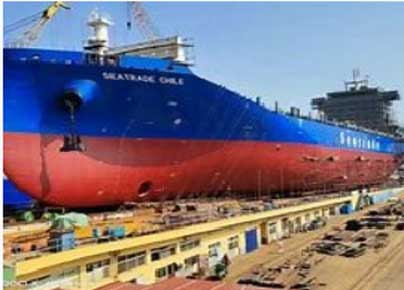
Seatrade, the specialist reefer operator, is building six reefer container ships, marking a new phase in the reefer industry. The first of these ships has already been delivered. The Curacao-based Seatrade Group, under the leadership of chairman Yntze Buitenwerf, is expanding its modern reefer capacity to meet the growing demand for high reefer intake. The Seatrade Chile, a Liberian-flagged vessel with a capacity of 1,800 TEU, is equipped with 639 electrical plugs for refrigerated boxes, providing a reefer capacity of 1,278 TEU.
Read More »Advertisement



Market Overview – Week 15/2024
2024-04-12

Banana selling prices in St. Petersburg ranged from USD 18.70 to 19.75 per box CIF, depending on brand, quality, volumes, and packing. Demand in most regions of the Russian Federation improved due to a decrease in fruit volumes from China and other origins other than Ecuador in Central Asian countries and former Soviet Union Republics. The conclusion of Ramadan also boosted banana consumption in Muslim territories. The exchange rate was 1 USD = 93.72 RUB. In the Mediterranean, prices were USD 16.0-17.0 per box CIF for Ecuadorian bananas, depending on the brand, volume, and region, with peaks up to USD 18.0 per box CIF in Libya for Ecuadorean bananas, while Central American bananas sold for around USD 2.0 less per box. In Algeria, prices remained high, reaching USD 2.0 per kg at retail. In the Mersin Free Zone, prices for re-exported bananas of Ecuadorian origin were USD 15.0-18.0 per box, depending on brand, quality, and volume, with peaks up to USD 19.0 per box for extra quality and high weight. Bananas from Central or Southern America were sold at USD 12.0-15.0 per box.
Read More »Advertisement



Banacol: pioneers in sustainability with carbon-neutral certification
2024-04-12

With a commitment to sustainability, Banacol leads the way in the banana industry, standing out for obtaining the carbon-neutral certification for two consecutive years. In the Urabá region, Banacol stands out for its agricultural production and leadership in sustainable environmental practices, an effort aligned with its mission to cultivate well-being for the community and the environment. This commitment has been recognized with carbon-neutral certification by the Colombian Institute of Technical Standards and Certification (ICONTEC) in 2022 and 2023, marking Banacol as a benchmark in Colombia's fight against climate change.
Read More »Advertisement


Vietnamese province has nine banana production unit codes for export
2024-04-12
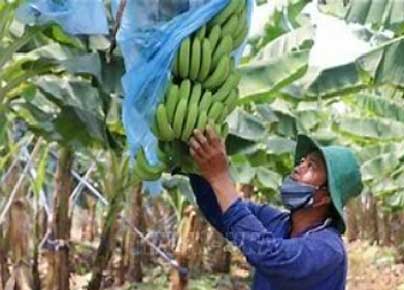
In 2023, Phu Tho will have 24 banana production unit codes for domestic consumption and nine banana production unit codes for export. Recently, the quality of Phu Tho bananas has improved, along with branding. According to information from the Crop Production and Plant Protection Sub-Department of Phu Tho province, in 2023, the unit has issued 24 production unit codes to serve domestic consumption for over 300 ha of bananas, as well as coordinating with the Department of Plant Protection to issue 9 production unit codes for 250 ha of bananas for export.
Read More »Advertisement


FMC Seeks US$63 Million Fine Against MSCfor Alleged Violations During Covid
2024-04-12

The U.S. Federal Maritime Commission (FMC) is seeking a civil fine of US$63.3 million against the Swiss-Italian Mediterranean Shipping Company (MSC). The FMC alleges that MSC "knowingly and willfully" violated the U.S. Shipping Act during the Covid pandemic, according to a report by London's Lloyd's List. The FMC Office of Enforcement has also requested an administrative law judge to issue a cease-and-desist order against MSC due to its alleged "blatant disregard for the Shipping Act".
Read More »Advertisement

Vado Gateway and Reefer Terminal to become the entry points for Chinese vehicles
2024-04-12
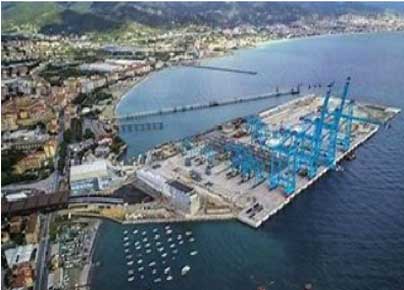
The Vado Gateway terminal aims to become one of the main hubs of automotive logistics. With the establishment of the Vehicle Logistic Vado company, a result of an agreement between the Fratelli Cosulich group and XCA (a company in turn formed by the collaboration between Arcese Trasporti and Conti), a commercial line is launched to import motor vehicles from China and use the quays of the Vado port as a gateway to Europe.
Read More »Advertisement

REYBANPAC RECOGNIZED AS ONE OF THE MOST SUSTAINABLE COMPANIES IN ECUADOR
2024-04-12
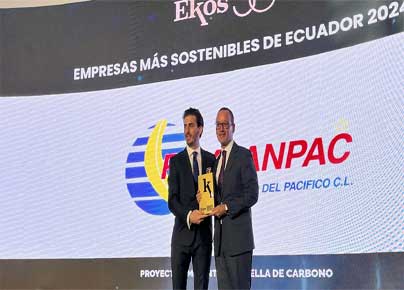
Quito, Ecuador.- During the Sustainability Summit 2024, held on April 11, REYBANPAC was recognized as one of the most sustainable companies in Ecuador under the "Triple Impact" methodology: economic, social, and environmental. "It is gratifying to see that our efforts in sustainability are reflected in recognitions like the one obtained today. These milestones are an incentive to continue our contribution to the development of our country, promoting the growth and well-being of the people," said Leonardo Viteri Andrade, Vice President of Corporate Affairs, who received this important award granted by the Ekos Group on behalf of the company.
Read More »Advertisement
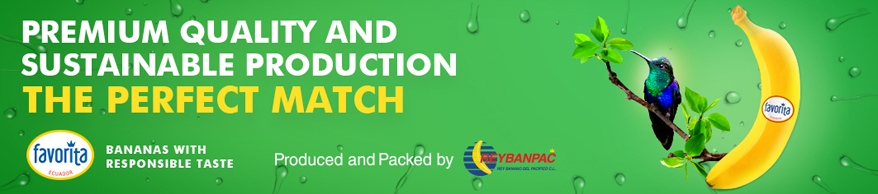
South American Exporters Complain About Bananas Sold at €0.88/kg at Kaufland
2024-04-12

In its flyer from April 4 to 10, the German supermarket chain Kaufland offered bananas from Ecuador and Colombia at a promotional price of €0.88 per kilogram. South American banana producers and exporters associations accuse: "These below-cost practices ignore the efforts of a sustainable supply chain. Supermarkets and discounters should inform consumers about the efforts behind a sustainable fruit, respecting certification standards and strict market regulations, by selling bananas at a fair price."
Read More »Advertisement



Fresh Del Monte to grow fruit in Sicily
2024-04-12
Fresh Del Monte focuses on Sicily, specifically Marsala, to produce small fruits under its brand. The official announcement of the investment will take place during the 3rd symposium on strawberries and small fruits at the 'A small fruits' company in Marsala. For years, Vito Gambina has been producing and selling raspberries, blackberries, strawberries, and wild strawberries on regional and national markets, products from the company in the Strasatti district.
Read More »Advertisement



Mexico could export bananas by rail to the U.S.
2024-04-12
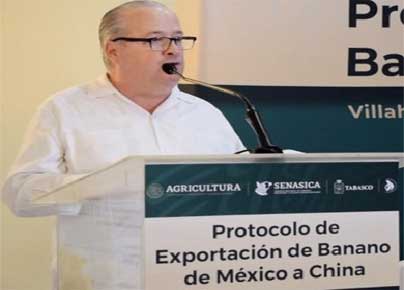
Adrián Prats, president of the National Banana Product System Committee, said that Mexican banana producers are enthusiastic about this project because it will reduce freight costs and allow the container to reach its destination directly. Prats Leal said that the Interoceanic Train passing through Teapa would enable them to send the fruit from Tabasco to the United States.
Read More »